Source Compostable Custom Printed Paper Plates for Parties
Find 30 listings for Compostable Custom Printed Paper Plates suitable for weddings, camping, and food service. Compare specifications like size, material, and customization options from verified suppliers in China.
Key considerations
Products List


Paper Plate 9 Inch Dinner Plate Disposable Paper Plate with 3 Sections
$0.03 - $0.06
MOQ: 10000 Pieces


Custom Biodegradable Disposable 9 Inch Food Grade Disposable Paper Plates
$0.05 - $1.00
MOQ: 1000 Pieces


Eco-Friendly Custom Printing Round Paper Tableware Disposable Paper Plate
$0.01 - $0.02
MOQ: 100000 piece


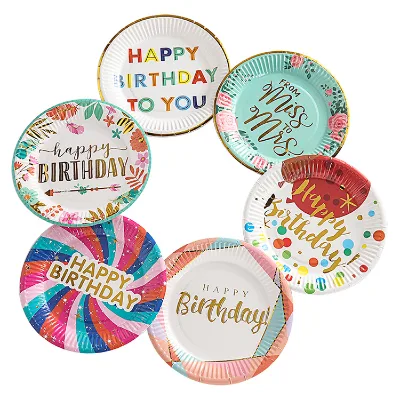

$3800.00 - $8000.00
MOQ: 1 Sets
Comprehensive Sourcing Guide
Strategic Sourcing Guide for Compostable Custom Printed Paper Plates
The global shift toward sustainable packaging has elevated the demand for Compostable Custom Printed Paper Plates, transforming them from niche eco-products into essential items for the food service, event, and retail sectors. For procurement professionals, navigating this market requires a disciplined approach that balances environmental claims with rigorous technical verification. The core product category encompasses disposable tableware made primarily from paper pulp or bagasse, designed to replace single-use plastics while offering high-quality printing capabilities for branding. This guide synthesizes observed market data and technical attributes to provide a framework for sourcing these items effectively, ensuring that buyers can make informed decisions based on verified facts rather than marketing assertions.
Technical Specifications and Material Composition
Understanding the material composition is the first step in defining product requirements. The supplied data indicates that the primary materials for these plates are Paper and Paper Pulp, with specific references to Bagasse Food Container Box configurations. Bagasse, a fibrous residue from sugarcane processing, is a common substrate for compostable tableware, offering structural integrity and heat resistance. The observed product attributes highlight a "Food-Grade Paper" material, which is critical for direct food contact applications. Buyers must verify that the specific supplier's material meets food-grade safety standards, as not all paper products are suitable for direct food interaction without specific treatment.
The physical specifications of these plates vary significantly to meet diverse functional needs. The observed market data lists multiple standard sizes, including 6-inch, 8-inch, 9-inch, and 10-inch round plates, as well as square and shaped options. Dimensions are also noted in metric units, such as 23*23cm, indicating a mix of international sizing conventions. Shape diversity includes Round, Square, and Shaped designs, with specific mentions of Oval Plate descriptions. The thickness and weight specifications are equally variable; one data point notes a weight standard of 15g, while another lists a single gross weight of 0.01 Kg. Procurement teams should request detailed weight and thickness specifications for each SKU, as these metrics directly influence the plate's rigidity, stackability, and suitability for hot or wet foods.
Compliance, Certification, and Environmental Claims
The "compostable" and "biodegradable" labels attached to these products are not merely marketing terms but require verification against recognized standards. The observed product attributes list several certifications, including CE/EU, FDA, CIQ, and specific high-quality standards like Ok Compost, EU, and LFGB. These certifications suggest that the products are intended for the European and North American markets, where regulatory compliance is stringent. However, buyers must exercise caution. While the data mentions standards such as EN 13432 and ASTM D6400 in the background context, these should be treated as benchmarks for verification rather than guaranteed attributes of every listed product.
When evaluating a supplier, the procurement team must demand current, valid certificates from accredited third-party laboratories. The presence of "Ok Compost" and "EU" certifications implies compliance with European biodegradability standards, while "FDA" indicates safety for food contact in the United States. "LFGB" is a German standard that is often stricter than general FDA requirements. It is crucial to verify that the specific batch of plates being ordered carries these certifications, as manufacturing processes can vary between production runs. Additionally, the "BPA Free" attribute is a key safety feature that should be confirmed, ensuring the absence of harmful chemicals often found in plastic alternatives.
Customization Capabilities and Printing Standards
One of the primary advantages of sourcing paper plates is the ability to customize them for branding. The data confirms that "Customization" and "Customized Logo" are available features, with "Customized Logo Acceptable" explicitly noted. This allows businesses to print their logos, event details, or promotional messages directly onto the tableware. The printing technology observed is CMYK (Cyan, Magenta, Yellow, Key/Black), which supports full-color, high-resolution graphics. However, a specific data point mentions "One Color" printing, suggesting that while full-color is possible, some suppliers or specific product lines may be limited to single-color applications to reduce costs or simplify the process.
Buyers should clarify the printing limitations with their supplier. The "Style" is described as "Fashionable," implying that the design aesthetic can be tailored to modern trends. The customization process typically involves creating a digital proof before mass production. It is essential to confirm the minimum order quantity (MOQ) for custom printing, as this often differs from the MOQ for standard, unbranded stock. The observed MOQ range in the market is broad, spanning from 1 to 100,000 units, with a specific high-confidence fact noting an MOQ of 50,000 PCS for certain custom orders. This variance highlights the importance of negotiating volume-based pricing and understanding the supplier's capacity for small-batch customization versus large-scale production.
Cost Drivers and Procurement Economics
The cost of Compostable Custom Printed Paper Plates is influenced by several factors, including material type, customization complexity, order volume, and logistics. The observed price range in the market is extensive, from $0.01 to $8,000, though this likely represents the total order value rather than a unit price, given the context of bulk procurement. The unit cost will depend heavily on the material choice; paper pulp and bagasse generally command a premium over standard paper due to their compostable nature and durability.
The "MOQ" is a significant cost driver. Suppliers often offer tiered pricing, where the unit cost decreases as the order volume increases. The data indicates an MOQ of 50,000 pieces for certain custom configurations, which may be prohibitive for small businesses or pilot projects. Buyers must balance the need for customization with the financial feasibility of meeting these volume thresholds. Additionally, the "Delivery Time" is a critical cost factor. One observed lead time is "25 Days After Deposit," while another states "According to The Quantity." Longer lead times can impact inventory management and cash flow, potentially necessitating higher safety stock levels. Packaging requirements, such as "OPP Bag, Carton" or "Paper Box," also add to the overall cost and should be factored into the total landed cost calculation.
Typical Applications and Usage Scenarios
The versatility of Compostable Custom Printed Paper Plates makes them suitable for a wide array of applications. The observed "Usage" categories include Food, Dessert, and Beverage, indicating that these plates can handle both solid and liquid food items. The "Special Feature" list confirms that the products are "Microwave Safe," "Freezer Safe," and "Oven Safe," expanding their utility beyond simple serving to include food storage and reheating. This functional flexibility is particularly valuable for food service providers who require a single solution for multiple stages of food handling.
The "Occasion" data points to a broad range of events, including Camping, Travel, Party, Graduation, Wedding, and Back (likely referring to backyard gatherings). The "Fashionable" style and "Multicolor" options make these plates ideal for themed events where visual appeal is paramount. For corporate events or weddings, the ability to print custom logos or monograms adds a layer of sophistication. In the context of camping and travel, the "Disposable" and "Biodegradable" features are essential, allowing for easy cleanup and minimal environmental impact in outdoor settings. The "Function" is listed as "Food Storage," suggesting that the plates can also serve as temporary containers for leftovers or transport.
Supplier Evaluation and Quality Control
Selecting the right supplier requires a rigorous evaluation process that goes beyond price and lead time. The "Original" location is listed as China, with a specific origin noted as Anhui, China. While this provides a geographical context, buyers should not rely solely on location but rather on the supplier's track record and quality control systems. The "High Quality" attribute is mentioned, but this must be substantiated through audits and sample testing.
Quality control should focus on several key areas: material consistency, print fidelity, and structural integrity. Buyers should request samples to test for leakage, heat resistance, and stacking stability. The "Certification" status must be verified against the specific batch numbers to ensure that the products meet the claimed standards. Additionally, the "Packing" method, described as "OPP Bag, Carton" or "CTN" (Carton), should be evaluated for its ability to protect the plates during transit. Damaged packaging can lead to product degradation, especially for paper-based items that are susceptible to moisture.
Long-Term Procurement Considerations
Sourcing Compostable Custom Printed Paper Plates is not just a one-time transaction but part of a long-term sustainability strategy. Buyers should consider the scalability of their supply chain and the supplier's ability to maintain consistent quality over time. The "Lead Time" variability suggests that production capacity can fluctuate, so establishing a reliable relationship with a supplier who can guarantee consistent delivery is crucial.
Furthermore, the regulatory landscape for biodegradable products is evolving. Buyers should stay informed about changes in standards such as EN 13432 or ASTM D6400, as these may become mandatory in their target markets. The "Keyword" list includes "Compostable," "Biodegradable," and "Eco Friendly," which are terms that are increasingly scrutinized by consumers and regulators. Ensuring that the supplier's claims are backed by valid, up-to-date certifications will protect the buyer from greenwashing accusations and maintain brand integrity.
In conclusion, sourcing Compostable Custom Printed Paper Plates requires a balanced approach that integrates technical specifications, compliance verification, and strategic cost management. By focusing on verified attributes such as material grade, certification status, and printing capabilities, buyers can secure a supply chain that supports both their operational needs and their sustainability goals. The broad range of applications and customization options makes these products a versatile choice for modern procurement, provided that the selection process is grounded in rigorous due diligence and evidence-based decision-making.
FAQs
What materials are used for Compostable Custom Printed Paper Plates?
These plates are primarily made from paper, paper pulp, or bagasse. Some specific models use food-grade paper to ensure safety for direct food contact applications.
Which certifications do these plates typically hold for food safety?
Common certifications include CE, EU, FDA, CIQ, Ok Compost, and LFGB. Buyers should verify that specific batches carry these valid certificates for their target markets.
Can buyers request a customized logo on these disposable plates?
Yes, customization and customized logos are available features for these products. Suppliers often accept custom designs, though some options may be limited to one-color printing.
What is the typical minimum order quantity for custom printed plates?
The minimum order quantity varies, with some specific custom orders requiring 50,000 pieces. The general market range spans from 1 to 100,000 units depending on the supplier.
How long does it take to receive an order after deposit?
Delivery times vary by quantity, with some orders taking 25 days after deposit. Other suppliers may adjust the lead time based on the specific order volume requested.
Are these plates safe for use in microwaves and ovens?
Yes, many options are microwave safe, freezer safe, and oven safe. These features allow the plates to be used for food storage and reheating in various settings.